


BBO – Bridge Base Online
Bridge Base On Line, LLC
I opened BBO – Bridge Base Online expecting a straightforward digital card table, but the first thing I noticed was how quickly it puts the actual decision in front of me. This is a bridge game from Bridge Base On Line, LLC, and its appeal comes from making each deal feel like a small test of memory, judgment, communication, and nerve. I choose a table, look at the cards, decide how aggressively to bid or how carefully to play, and then wait to see whether my reasoning survives contact with the other players.
That simple sequence gives the game a very different feel from casual card apps built around quick matching or luck-heavy rounds. Bridge asks me to pay attention. A good hand does not automatically guarantee a good result, and a weak hand can still become interesting when I read the bidding correctly. The game is free to start and rated for Everyone, so it is easy to try, but the learning curve is real. My honest view is that it works best for people who already know bridge or genuinely want to learn how bridge thinking works online.
How the first deal turns into a decision
The first action in BBO is not simply tapping a large “play” button and waiting for entertainment. I have to understand what kind of bridge experience I want, find a suitable table, and then make choices that carry consequences through the whole deal. That setup is part of the game rather than an obstacle to it. Once the cards are dealt, every bid becomes information for my partner and opponents, while every card played narrows the possibilities still left in the hand.
This is where the app feels more serious than many familiar card games. In a typical solitaire game, I mainly react to the layout in front of me. In a casual trick-taking game, the excitement may come from the next card. Here, I am constantly asking what the other players know, what they might be hiding, and whether my partner will interpret my action as intended. The first bid can influence the entire direction of the deal, so careless tapping is rarely harmless.
For a newcomer, that can be intimidating. I would not recommend starting with competitive tables if the basic language of bridge is still unfamiliar. It is much easier to enjoy the app after learning the foundations elsewhere or playing with patient people. BBO gives the game a place to happen; it does not remove the need to understand bidding, contracts, tricks, and partnership signals.
Related News






One useful habit is to slow down before making a bid and identify the purpose of the action. Am I describing strength, showing a suit, asking for information, or trying to interfere with the opponents? That short pause makes the game feel less like guessing. It also helps me review mistakes later because I can separate a bad plan from an unlucky result.
The table is the real interface
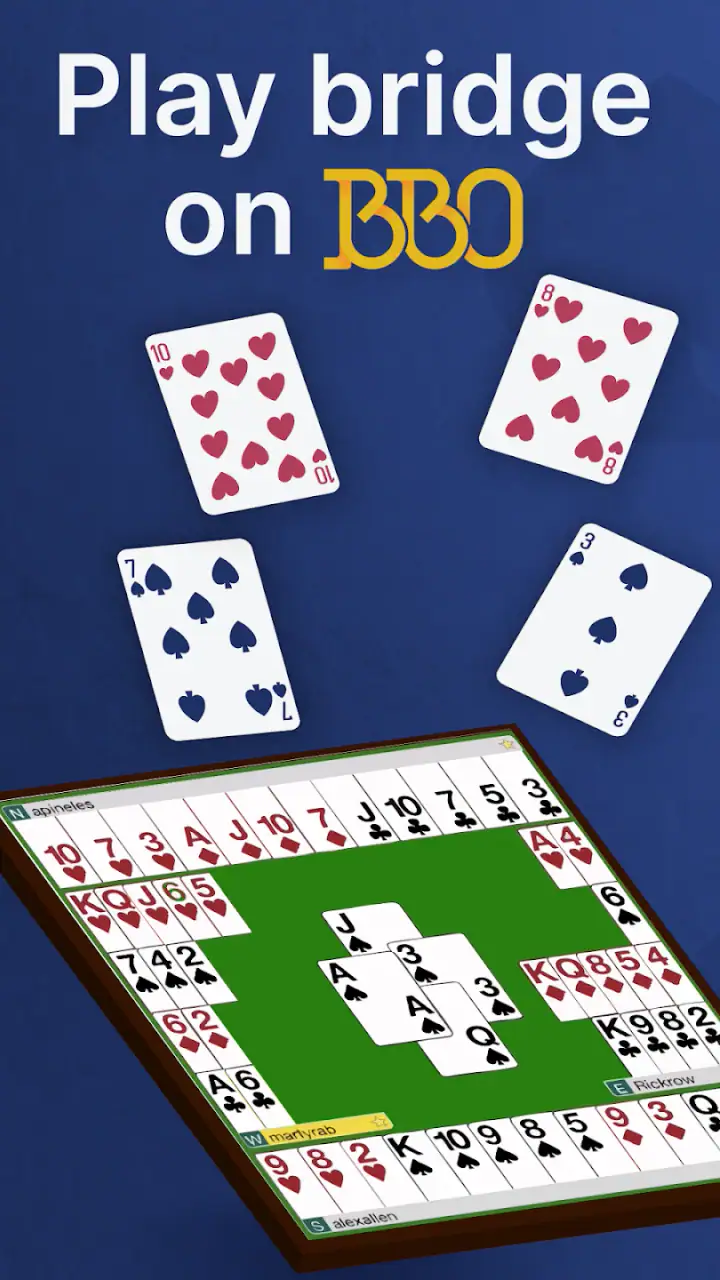
The most important screen is not the account area or the store page. It is the table where the cards, bidding sequence, contract, and trick play come together. I find the experience strongest when I treat the visible information as a shared record rather than a collection of isolated buttons. The bidding tells a story, and the cards played afterward either confirm or challenge that story.
That makes BBO especially useful for players who enjoy reconstructing a deal. After a hand, I can think through the moment when the plan changed: perhaps the opening lead exposed a weakness, perhaps a key suit broke badly, or perhaps I misread the partnership auction. The value is not only in whether I won. The real value is understanding why the result happened.
Gallery
A practical tip is to keep a mental note of the first point where my assumptions became uncertain. If I wait until the end to remember everything, the lesson becomes vague. If I notice that uncertainty during the deal, I can make a more disciplined choice and later compare it with the outcome. This turns a normal hand into a small training exercise without needing a separate study session.
The trade-off is that bridge requires uninterrupted attention. A notification, a rushed tap, or a moment away from the table can damage the whole deal. I would be comfortable using it during a quiet break, on a commute only when I can reliably focus, or at home after setting aside time. It is not the kind of card game I would choose when I want something I can abandon every few seconds.
Feedback arrives through the next trick
BBO’s feedback rhythm is quieter than the bright reward loops used by many mobile games. I do not play a hand simply to collect a string of flashy rewards. Instead, the game answers my decisions through the auction, the opening lead, the developing tricks, and the final result. The feedback can be immediate, but it often becomes meaningful only after I connect several actions together.
Suppose I choose a contract that looks ambitious. The early tricks may reveal that my plan is sound, or they may expose a missing entry or a blocked suit. That information changes what I should do next. I am not merely waiting for the app to tell me whether I succeeded; I am reading the position and adjusting. The satisfaction comes from recognizing the pattern before the hand is over.
This rhythm rewards patience. A player who focuses only on the last card of each trick may miss the larger structure. I get more from the game when I watch which suits have been shown, which high cards are still possible, and what the bidding suggests about distribution. Those details create a steady stream of small feedback moments, even when the final score is disappointing.
There is also an important distinction between a bad decision and bad luck. A contract can fail because I misjudged the hand, but it can also fail because the cards were arranged unfavorably. BBO is most rewarding when I review the process rather than treating every loss as proof that the whole approach was wrong. That mindset protects the game from becoming frustrating and makes improvement feel achievable.
For experienced players, this is where online play becomes particularly convenient. I can move from one deal to the next without setting up physical cards, finding a full group, or waiting for someone to shuffle. The convenience does not simplify bridge, but it removes some of the practical friction around finding a hand to analyze.
Why the reward is understanding, not just winning
The strongest reward in BBO is the moment when a decision makes sense in retrospect. I might recognize that a cautious bid kept the partnership safe, that a defensive card forced a difficult choice, or that a seemingly ordinary discard removed an opponent’s best route. Those moments stay with me longer than a generic win animation because they improve the way I see the next deal.
That is also why the app can appeal to different kinds of bridge players. Someone who enjoys competition may care about the result and the quality of the opposition. Someone learning the game may value seeing how experienced players construct a hand. A casual player may simply enjoy the concentration of solving a new puzzle. The same deal can provide different rewards depending on what I am trying to improve.
I would be careful, however, about expecting instant progress. Bridge knowledge compounds slowly. A single successful hand does not mean I have mastered the bidding system, and a poor result does not necessarily mean I played badly. The reward is more reliable when I set a narrow goal, such as following the auction more accurately, counting a suit, or planning the contract before playing the first trick.
One of my favorite ways to use the game is to treat a hand as a conversation. My bid communicates something, my partner’s response modifies that message, and the opponents’ actions provide additional clues. Thinking this way makes the game less mechanical. It also explains why bridge is more satisfying with reliable table etiquette and clear communication than with players who rush through every decision.
The free price makes experimenting easy, but the app includes in-app purchases ranging from $0.99 to $179.99 per item. I would decide in advance whether I am comfortable spending money and avoid treating purchases as a measure of progress. The core appeal for me is the play and analysis, not the idea that spending more should make me a better bridge player.
The reset after a hand keeps the loop alive
When a deal ends, BBO has a natural reset point. I can accept the result, identify one lesson, and begin again with a new set of cards. That reset is important because bridge can otherwise become emotionally sticky. If I keep replaying a mistake in my head, the next hand starts with frustration instead of curiosity.
My preferred routine is simple: after each deal, I ask what I expected, what actually happened, and which decision mattered most. I do not try to explain every card. A single clear observation is enough. If I misread the auction, I focus on that. If the plan was correct but the distribution was unfavorable, I note the difference. Then I let the hand go.
This approach makes short sessions possible. I can play a small number of deals when I have limited time, provided I am not joining a format that expects a longer commitment. It also makes longer sessions more manageable because each hand has its own beginning and end. The reset is not just a convenience; it is what allows me to return without carrying every previous result into the next auction.
Still, the reset can encourage “one more hand” behavior. A close loss, a missed opportunity, or a promising partnership may make me want to continue longer than planned. That is enjoyable when I have time, but it can become tiring because bridge demands concentration. I get better results when I stop after a natural break rather than playing while mentally drained.
Players wondering whether the game is suitable for solo use should understand the nature of bridge before installing it. This is not a conventional single-player card puzzle where I control every side of the board. The experience depends on interacting with other players and interpreting partnership play. If I want a quiet offline pastime with no social or competitive pressure, a solitaire app will probably suit me better.
On the other hand, if I want to find online bridge activity without organizing a physical table, BBO is a much more direct option. Its identity is built around being a large online bridge club, and that matters because the game’s value grows when there are enough tables, opponents, and partners to make each session feel varied. The app is not simply a digital deck; it is a meeting place for a specific card community.
Where it differs from ordinary card alternatives
Compared with solitaire, BBO offers far more social depth but much less instant relaxation. Solitaire lets me control the pace and often gives me a clean puzzle with no need to coordinate with anyone. BBO asks me to read a partner and opponents, accept imperfect information, and live with decisions that cannot always be undone. I would choose solitaire for a few quiet minutes and BBO when I want a thoughtful contest.
Compared with casual trick-taking games, bridge has a heavier emphasis on planning before the first trick. The bidding phase is not a decorative prelude; it is a central information exchange. That gives the game greater strategic range, but it also means a player who only wants fast card action may find the pace too deliberate.
Compared with playing at a physical club, the app is more convenient and easier to access, but the atmosphere is different. A real table offers face-to-face communication and a more tangible sense of occasion. BBO is better when I want availability and repetition. It is less satisfying if what I really want is the social ritual of sitting across from familiar people.
The app’s average rating is 4.4 from around 3.8 thousand ratings, with over 100 thousand installs, which suggests that it has found a solid audience without making it universally appealing. I read that as a fair reflection of the product: bridge players can find a serious home here, while people seeking a broad, instantly understandable card game may not connect with it.
Its technical entry point is also fairly accessible. The current version is 6.60.5 and it runs on Android 7.0 or later, so the app is not limited to only the newest devices. That does not guarantee that every phone will feel equally comfortable, but it makes the starting requirement reasonable for many Android users.
Small habits that improve the experience
I get more from BBO when I separate playing from studying. During a live deal, I focus on the current information instead of trying to calculate every possible line. Afterward, I revisit the one or two decisions that shaped the result. This keeps the game enjoyable while still turning ordinary sessions into useful practice.
Another helpful habit is to watch the tempo of my own decisions. I do not mean rushing; I mean noticing when I am acting automatically. A bid made because it “looks familiar” deserves a second thought, especially when the opponents have already changed the context. The pause is small, but it often prevents me from following a memorized pattern that does not fit the hand.
I also recommend choosing tables and opponents with the intended mood in mind. If I want to learn, I need patience and room to think. If I want pressure, I can accept that mistakes will be exposed more quickly. Mixing those goals without realizing it is a common source of disappointment. The app can support both kinds of play, but my expectations have to match the table.
A less obvious trade-off is that online convenience can reduce the ceremony that helps some players concentrate. Physical cards, spoken bids, and a shared room naturally mark the beginning of a session. On a phone, it is easy to open the game casually and then discover that I am mentally unprepared. I play better when I create my own small ritual: silence distractions, decide how long I have, and treat the first deal as a warm-up.
Who should install it, and who should pass
I would recommend BBO to bridge players who want regular online practice, to learners who are ready to engage with the game’s vocabulary, and to experienced players who value having a bridge table available without arranging a physical gathering. It is particularly suitable for someone who enjoys analyzing decisions after the result rather than needing constant entertainment during the hand.
I would skip it if I want a card game that explains itself in seconds, works best offline, or can be played while multitasking. I would also hesitate to recommend it to someone who dislikes depending on partners and opponents. Bridge is inherently interactive, and the quality of a session can be affected by communication, pace, and table behavior as much as by the cards.
The Everyone rating makes the app broadly accessible in terms of age, but that should not be confused with beginner simplicity. A young or new player may still need an introduction to bridge from a person, book, lesson, or another learning resource. The game welcomes a wide audience; the rules themselves remain deeper than the rating label suggests.
The loop verdict: play, learn, reset, return
My verdict is that BBO succeeds because its loop is built around meaningful decisions. I act by bidding or playing a card, receive feedback through the developing hand, earn the reward of understanding or a good result, reset when the deal ends, and return because the next set of cards creates a new problem. That loop is subtle, but it is strong enough to keep me engaged without relying on noisy distractions.
The experience is not frictionless. The learning curve can be steep, online concentration matters, and the social nature of bridge means the app will not suit everyone. The purchase range also deserves a little financial awareness, even though the game is free to start. I would approach it as a bridge club in my pocket, not as a universal casual card app.
After spending time with it, I see the best reason to use BBO as the chance to turn spare time into deliberate bridge practice. A deal can be short, but the thinking behind it can stay useful long after the table closes. If that kind of feedback is rewarding to you, this is a compelling card game to try. If you only want quick luck, instant wins, or a completely private puzzle, another option will probably be a better match.
For me, the app earns its place through the moment when a hand stops being a collection of cards and becomes a chain of understandable choices. That is the point at which I want another session—not because the game is pushing me forward, but because I can see one more opportunity to read the table a little better.
FAQs for BBO – Bridge Base Online
What is BBO – Bridge Base Online, and who is it designed for?
BBO – Bridge Base Online is an online platform for playing contract bridge against real people, friends, or computer opponents. It is suitable for complete beginners, casual players, and experienced tournament competitors. The app includes tables, matchmaking, practice modes, teaching resources, and live events, although the overall experience is much more enjoyable if you already understand basic bridge rules and bidding terminology.
Can I play BBO for free, or does it require a subscription?
BBO offers many ways to play without paying, including casual tables, practice games, and selected public events. However, some tournaments, premium lessons, robots, and special features may require BB$ or another form of payment. Before entering a paid event, check the entry fee and conditions carefully. Prices and available features can vary depending on the platform and region.
Can I play with friends on BBO – Bridge Base Online?
Yes, BBO makes it possible to meet friends at virtual tables, invite other players, and organize private games or team matches. You can search for usernames, add contacts, and communicate through table chat. The exact process may feel less intuitive to newcomers than in modern social games, so it is worth exploring the lobby and help sections before arranging an important match.
Does BBO include lessons or practice options for beginners?
The app provides several useful options for learning and improving, including games against computer-controlled robots, practice deals, hand records, bidding information, and access to teaching or tournament content. It is not a fully guided course in every area, so beginners may still need an external bridge tutorial or an experienced partner. Nevertheless, reviewing completed hands is an excellent way to understand mistakes.
What should I know about BBO’s interface, chat, and online requirements?
BBO is primarily an online service, so a stable internet connection is needed for tables, tournaments, updates, and communication. Its interface is functional and information-rich, but it can initially appear crowded because it is designed around bridge scoring, auctions, cards, kibitzing, and tournament details rather than flashy presentation. Chat tools are available, though users should follow table etiquette and the platform’s community rules.
Pros
- Large international player base makes it easy to find opponents and tables.
- Supports tournaments
- team matches
- and casual games for different skill levels.
- Useful bidding and play tools help players review decisions during a game.
- Available on both Android and iOS for convenient play across devices.
- Regular events and duplicate bridge formats add variety beyond casual matches.
Cons
- The interface can feel dated and less intuitive for newcomers.
- Many competitive features depend on having a stable internet connection.
- Free play may include ads or prompts for optional paid upgrades.
- The learning curve is steep without prior knowledge of bridge conventions.
- Some tables and tournaments may require payment or in-app credits.


